Rented Flat Decor: How to Style a Living Room Without Drilling
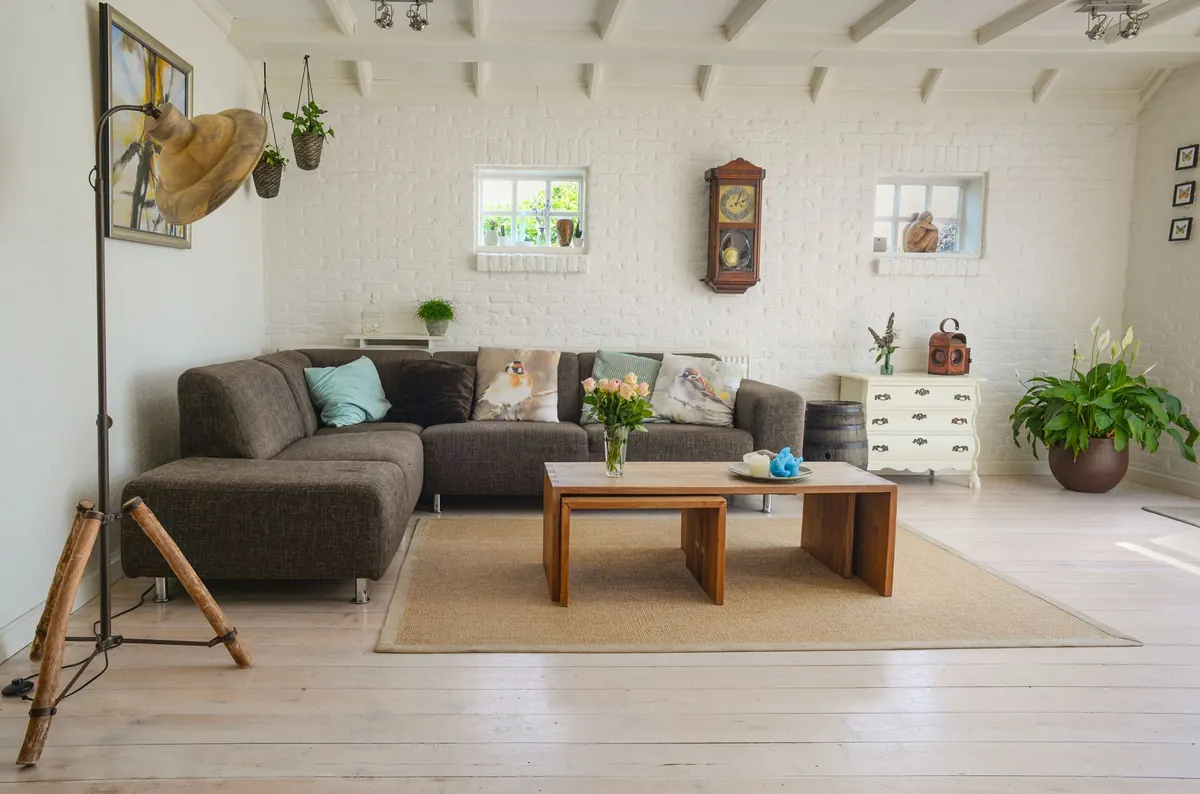
A rented living room tends to arrive with the same set of limits: magnolia walls, a carpet that has seen better decades, and a tenancy agreement that rules out drilling. None of that stops you from ending up with a room that looks properly finished. It just changes the tools you reach for. Adhesive hooks, freestanding shelving and removable wallpaper will do most of the work, and every one of them can come down again when you move.
Before you spend anything, read your tenancy agreement. Most standard agreements ask for permission before anything is fixed to walls, and "removable" products still count if they lift paint. A short email to your landlord or letting agent confirming what you have in mind saves an awkward conversation at check-out. If you are unsure about your rights as a tenant, it is worth checking with a professional adviser such as Citizens Advice.
Sort the layout before you stick anything up
Decorating the walls while ignoring the floor plan is the most common mistake in a rented flat. A few small moves will make more difference than any amount of adhesive.
- Pull furniture away from the walls where space allows. Even 15cm of breathing room makes a small room look deliberate rather than crammed.
- Use a rug to define the seating area, especially in an open-plan living space where the sofa is doing double duty as a dining chair.
- Angle an armchair or floor lamp into a corner rather than squaring everything to the walls. Rounded arrangements feel warmer and hide awkward pipework.
- Keep the tallest piece — bookcase, wardrobe, shelving unit — in a corner or against a solid wall, and let the eye travel down towards the seating.
- Work with the socket you have. Plug-in lighting and extension leads let you build a lighting plan without touching the wiring.
Adhesive hooks: excellent, within limits
Adhesive hooks are the workhorse of rented decorating. They hold pictures, hang curtains over existing poles, keep trailing plants off the floor and hold up fairy lights around a window. They fail for one of two reasons: a dirty surface, or too much weight.
Prep matters more than the hook
Wipe the wall with a damp cloth and let it dry completely, then clean the spot with a little isopropyl alcohol on a pad and allow that to evaporate. Press the adhesive pad firmly for around 30 seconds, and leave it an hour before hanging anything — overnight is better. Avoid newly painted walls and cold rooms; adhesive grips less reliably there and can take the paint with it when it goes.
What not to hang
- Light frames, small mirrors, garlands and string lights: fine on a medium hook.
- Anything heavier than a bag of sugar: use two hooks spaced apart, or choose another method.
- Textured wallpaper, woodchip and flaking paint: not suitable. The paper comes away before the hook does.
- Above a sofa or bed: keep glass and heavy frames off the wall entirely. No fixing is worth the risk.
Look for strips and hooks designed to release by stretching rather than prising. They come away far more cleanly than standard foam pads, and the tab is your friend when removal day arrives.
Let freestanding shelving carry the storage
A narrow ladder shelf, a slim console behind the sofa or a low cube unit can do everything a wall-mounted shelf would, without a single hole. The trick is stability. Load the heaviest items — books, records, a stack of board games — on the bottom shelf, and keep the top two-thirds light. Add felt or silicone pads under the feet so the unit does not scratch the floor or shift on an uneven carpet.
Place tall, narrow units out of walk-through routes, and avoid stacking anything above eye level on them. If a shelving unit or television stand comes with an anti-tip strap and you have children or pets, ask your landlord about fitting it properly. One screw into a wall is a small request when safety is the reason, and most landlords would rather agree than worry.
Removable wallpaper for one good wall
Peel-and-stick wallpaper has improved no end in recent years, and one patterned panel behind the sofa or on the chimney breast is enough to make a room feel designed rather than temporary.
Where it works
Smooth, well-sealed paint is the ideal surface. Skip it on bare plaster, freshly painted walls, textured finishes and anywhere that suffers from damp or condensation — adhesive paper traps moisture and will bubble or lift. Woodchip is a non-starter. Order more than you need, and if you can, test a small square in an inconspicuous spot for a week before committing to a whole wall.
Applying it without bubbles
- Measure the height of the wall in three places and cut your first panel to the tallest measurement.
- Draw a vertical pencil line with a spirit level; work from the ceiling down or the skirting up, whichever edge is straighter.
- Peel the backing away in stages, smoothing with a felt-edged squeegee as you go rather than pressing the whole panel on at once.
- Butt the seams closely rather than overlapping, and trim the top and bottom with a sharp craft knife against a metal edge.
- Work out any stubborn air with a pinprick and a fingertip, not a fingernail.
The finishing layer: light, textiles, greenery
Two lamps on separate switches, or a plug-in wall light, will do more for a rented room than any wall colour. Warm-toned bulbs — around 2700K — flatter both furniture and faces. Layer in texture with cushion covers, a throw folded over the arm of the sofa, and curtains swapped onto the existing pole, which takes minutes and costs nothing in decorating terms.
Plants soften corners and hide scuffed skirting. Art can lean on top of a bookcase, or rest on a picture ledge that sits freestanding on a console. Group odd numbers of objects by height and let a couple of them overlap.
Moving out without losing your deposit
Keep the packaging for anything you plan to reuse, and photograph the wall before you put anything up. When it is time to go, warm each adhesive patch with a hairdryer on a low setting, then stretch the tab slowly and parallel to the wall rather than tugging it outwards. For foam tape, work dental floss or fishing line behind the hook in a gentle sawing motion. Any residue usually responds to warmth, a fingertip and a cloth, or a proprietary adhesive remover followed by soapy water. Peel wallpaper at a low angle and stop immediately if paint starts to lift — that is a job for your landlord, not for you.
Leave a note of anything you have changed and mention it before the check-out inspection. Goodwill goes a long way, and honesty is far cheaper than a repainting charge.
Photo: ClickerHappy / Pexels